







Why ‘College Dropout’ Has Become the New Badge of Honor for Startup Founders
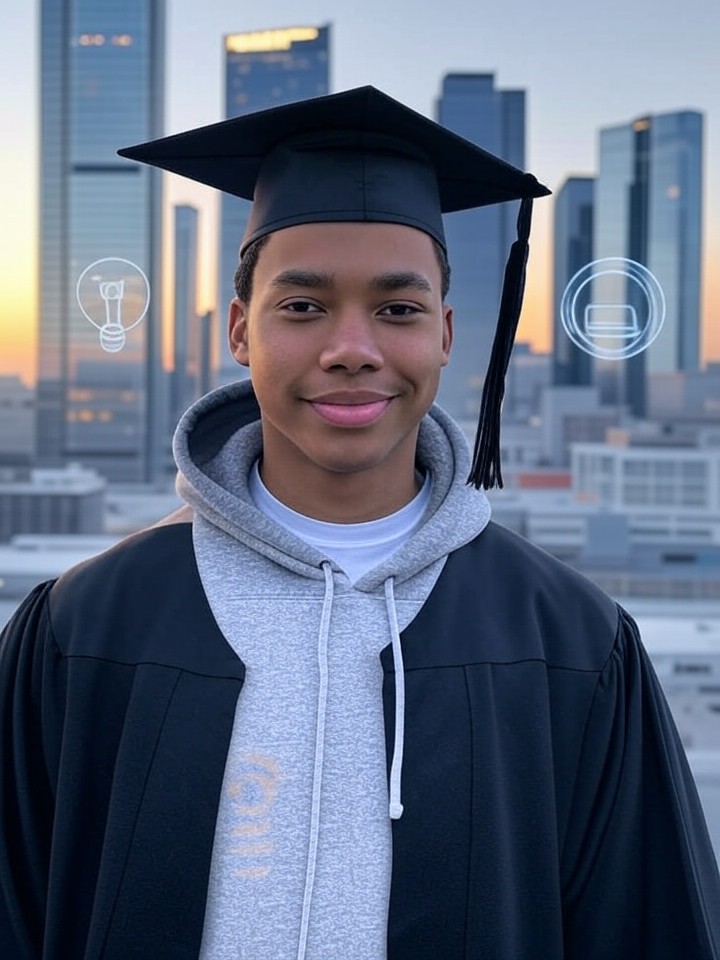
In recent years, the narrative around leaving college early has undergone a remarkable transformation. What was once seen as academic failure has become a badge of entrepreneurial bravery. The term “college dropout,” especially within the startup and artificial intelligence (AI) ecosystems, is evolving into a symbol of individuality and bold risk-taking. Today, many young founders tout their decision to leave university as a cornerstone of their origin story—proof that they prioritize innovation over convention.
The New Era of Startup Founders: Redefining the Meaning of ‘Dropout’
Historically, dropping out of college was viewed as a setback—a deviation from the traditional path toward success. However, with the rise of Silicon Valley and global startup culture, that perception has changed dramatically. Figures like Steve Jobs, Bill Gates, and Mark Zuckerberg paved the way, showing that innovation often happens outside academic walls. Now, a new generation of AI-driven entrepreneurs is building on that legacy, wielding the ‘dropout’ label with pride during investor meetings and accelerator pitches, including those for Y Combinator (YC).
This reversal in reputation is more than a cultural shift—it’s a reflection of the tech industry’s relentless focus on outcomes rather than credentials. In many ways, the ability to identify problems and create solutions at scale matters more than earning a diploma.
AI Founders and the Rise of the ‘Dropout’ Narrative
Artificial Intelligence startups, in particular, are at the heart of this evolving trend. The rapid pace of AI research and development often outpaces formal education. Many university programs simply can’t keep up with the advancements happening in machine learning, large language models, and generative AI. As a result, ambitious students find themselves learning more through real-world projects and open-source communities than in the classroom.
When pitching to accelerators such as YC, these founders often highlight their decision to leave school as proof of focus and agility. It signals to investors that they’re committed full-time to their ventures — an appealing trait in a field that demands constant iteration and speed. By positioning their dropout status as a deliberate strategic move rather than an accident, they craft a narrative of entrepreneurial conviction.
Examples of Notable ‘Dropouts’ in AI and Tech
- Vitalik Buterin – The Ethereum co-founder left university to pursue blockchain development, showing that transformative ideas don’t always require formal credentials.
- Alexandr Wang – The founder of Scale AI dropped out of MIT to build a platform that now powers AI training for major corporations.
- Other rising founders in the AI space are following suit, leaving degree programs to prototype new solutions in computer vision, autonomous systems, and generative technologies.
This growing list reinforces a broader message: dropping out is increasingly associated with drive, talent, and a willingness to create something world-changing from scratch.
Why Investors Value the ‘Dropout Founder’ Archetype
From the perspective of venture capitalists and accelerator programs, what makes a founder compelling isn’t necessarily their degree but their execution. Many investors are drawn to independent thinkers who buck traditional paths and commit to solving problems full time. For investors, a dropout founder often embodies the kind of obsessive passion that drives disruptive innovation.
In the context of the YC startup ecosystem, this mindset is particularly revered. Y Combinator’s philosophy focuses on velocity — building, testing, and iterating quickly. Having founders who are unconstrained by academic commitments aligns perfectly with that ethos. The program itself is known to encourage ambitious individuals to commit entirely to their startups, even if doing so means leaving school behind.
Authenticity and Narrative Matter
Still, merely being a college dropout doesn’t guarantee success. What matters most is how the founder frames their decision. The story must be authentic — rooted in a genuine belief that building something impactful required a departure from academia. Investors can easily distinguish between strategic risk-taking and impulsive choices. In well-crafted pitches, the dropout narrative is contextualized as a catalyst for focus, not rebellion.
The Educational System’s Growing Disconnect
Another factor driving this phenomenon is the widening gap between academia and real-world tech innovation. Universities, while still centers of research, often move too slowly to provide students with experiences relevant to modern startup work. Course content can quickly become outdated in dynamic fields like AI and data science. Meanwhile, hands-on projects, hackathons, and internship experiences are producing tangible skills that employers and investors value more highly than grades.
For aspiring founders, this disconnect can be frustrating but also liberating. With access to affordable online resources, open-source data, and rapid prototyping tools, students are now capable of building scalable products long before graduation. Leaving college becomes less about opting out of education and more about accelerating one’s learning curve independently.
The Role of Online Learning and Open Source
In the AI world, where frameworks like TensorFlow and PyTorch are open and collaborative, learning outside formal institutions is not only possible but encouraged. Many developers gain expertise through GitHub projects, online tutorials, and community forums. This democratization of knowledge is breaking down the walls that used to separate academia from entrepreneurship, further legitimizing alternative paths such as the “dropout founder.”
Challenges and Misconceptions
Despite the romanticism surrounding dropout success stories, it’s important to recognize their risks. Leaving college without a clear plan can lead to financial instability or burnout. The success of well-known dropouts often overshadows the many who struggle without academic support or investor backing. For those considering this path, long-term strategy and execution discipline are crucial.
Additionally, the glorification of the dropout culture can perpetuate unrealistic expectations. Not every startup thrives, and not every dropout story results in billion-dollar valuations. The key lies in calculated risk-taking, not reckless abandonment of formal education. Successful founders who leave college behind typically do so with solid prototypes, market validation, and a clear sense of purpose.
The Future of Entrepreneurship and Education
The shift toward valuing entrepreneurial capability over credentials signals a broader structural change in how society perceives intelligence and professional worth. As the lines blur between education and innovation, universities are beginning to adapt — offering flexible programs and incubators that allow students to pursue startups without dropping out completely.
Some institutions now partner with accelerators, providing credit for participation in entrepreneurial programs. This hybrid approach may redefine the founder journey, allowing students to combine the freedom of startup life with the resources of academia. However, as long as speed remains a competitive advantage in technology markets, dropout founders will likely continue to capture attention—and funding.
Conclusion: Redefining Success Beyond the Classroom
The term “college dropout” has evolved from stigma to symbol — representing creativity, boldness, and unwavering focus on innovation. Especially in the AI and tech startup community, being a dropout is increasingly perceived as a competitive edge. It suggests a founder is willing to take ownership of their destiny, unburdened by traditional timelines or educational systems.
Ultimately, this movement encapsulates the entrepreneurial spirit: learning by doing, failing fast, and innovating relentlessly. Whether or not future founders choose to complete their degrees, one thing is certain — the world of startups will continue to value those who dare to step outside the boundaries of convention to create something extraordinary.