








The Rise of Humanoid Robotics and AI Chip Visibility: How 1X and Nvidia Are Shaping the Future of Automation
The intersection of humanoid robotics and artificial intelligence continues to evolve at a rapid pace. As more industries seek automation solutions that can adapt to human environments, companies like 1X and Nvidia are taking bold steps toward redefining the future of work and technology transparency. In this article, we explore how 1X’s ‘home’ humanoids are branching out into industrial environments and how Nvidia’s new chip visibility software may change how we understand and manage the global AI infrastructure.
The Expansion of 1X and Its Humanoid Robots
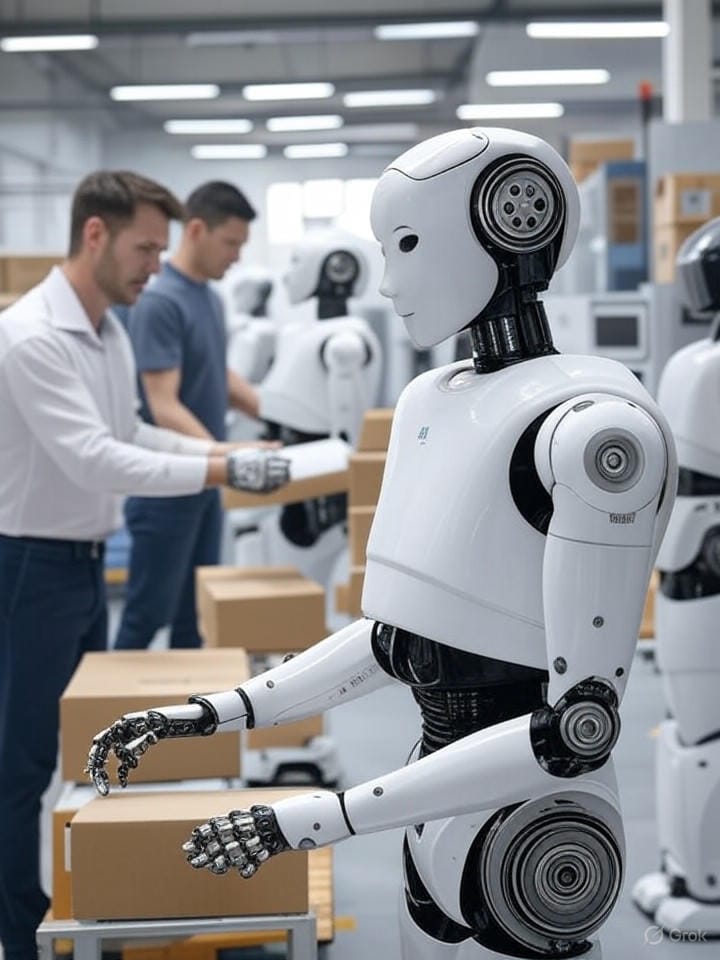
1X, a robotics company dedicated to creating practical humanoid robots, recently announced a partnership to introduce its ‘home’ humanoids into factory and warehouse operations. Known for designing robots that can safely and efficiently interact with their environments, 1X’s latest move demonstrates a major shift—from domestic assistance to industrial productivity.
From Homes to Factories: A New Era of Workforce Support
The core of 1X’s technology is its emphasis on combining human-like dexterity with AI-driven decision-making. Initially developed to help with household tasks and personal support, the company’s robots are now being tailored for industrial duties that require repetitive precision, adaptability, and endurance.
Factories and logistics centers face ongoing challenges due to labor shortages, high turnover rates, and the rising demand for faster, error-free production. By introducing humanoid robots capable of operating alongside human staff, companies can achieve consistent productivity while reducing human strain on physically demanding tasks.
Key Features of the 1X Humanoid Platform
- Advanced Mobility: The robots are equipped with stable locomotion systems allowing them to navigate complex industrial floors.
- Adaptive Learning: Using onboard AI, 1X humanoids learn from real-time data to optimize their performance for specific tasks.
- Safety and Collaboration: The design prioritizes safe human-robot interaction through smart motion planning and collision detection.
- Energy Efficiency: Optimized power management ensures longer operation times in factory conditions.
These capabilities make the transition from domestic to industrial environments not only feasible but highly advantageous. The humanoid’s form factor allows it to utilize existing tools and infrastructure, avoiding the costly redesigns often required with specialized industrial robots.
How Humanoid Robots Are Changing Warehouse Operations
The introduction of humanoid robots into warehouses is more than a technological milestone—it represents a strategic shift in how businesses view work distribution. By combining physical ability with machine learning, these systems can adapt to shifting workloads, handle logistics operations, and improve operational efficiency across the board.
Applications in Real-World Warehouses
Humanoid robots can perform a wide variety of tasks, including:
- Sorting and packaging products based on dynamic demand.
- Assisting with inventory management through visual recognition and analytics.
- Transporting goods between storage zones and loading areas.
- Collaborating with human workers for complex manual assemblies.
Unlike traditional robotic arms or AGVs (Automated Guided Vehicles), humanoid robots can operate in environments originally designed for human ergonomics. This reduces the need for infrastructural modification and allows faster integration into existing workflows.
Nvidia’s Chip Visibility Software: A Leap in AI Infrastructure Transparency
While 1X revolutionizes physical workspaces, Nvidia is innovating in data visibility and management. The semiconductor giant, known for powering countless AI ecosystems with its GPUs and specialized AI chips, is working on a software solution that enables users to view the approximate locations of its chips worldwide.
Why Chip Tracking Matters
Nvidia’s proposed software innovation aims to address growing concerns about transparency and supply chain management in the AI sector. As AI infrastructure scales globally, knowing where key hardware components reside helps companies monitor deployment, maintenance, and potential security risks.
Accurate tracking data can also assist governments, data centers, and enterprises in ensuring compliance, optimizing resource usage, and managing global chip distribution more efficiently.
Benefits for the Broader AI Ecosystem
- Operational Insight: Provides businesses with better information about chip distribution across global networks.
- Enhanced Security: Geolocating critical hardware supports data integrity and minimizes misuse.
- Performance Optimization: Enables real-time performance assessments across distributed AI resources.
- Sustainability: Facilitates smarter energy management by identifying clusters of high-consumption systems.
Synergy Between Robotics and AI Hardware Transparency
At first glance, the efforts of 1X and Nvidia may appear unrelated—one focuses on robotics, the other on data infrastructure. Yet, both developments highlight a shared objective: leveraging artificial intelligence and machine learning to optimize workflows, both physical and digital.
As AI becomes more integrated into robotics, a transparent understanding of where and how AI chips operate can influence not only data management but also how physical robots deploy these computational resources. For instance, an industrial robot might rely on cloud-based GPUs for processing complex visual tasks, while on-site servers powered by Nvidia chips handle real-time decision-making.
Implications for Future Automation
The convergence of robotics and improved AI visibility could pave the way for smarter resource allocation. Factories may soon have the ability to monitor both their physical robotics and AI processing power from a unified dashboard—enhancing efficiency, safety, and control.
For organizations adopting both 1X humanoids and Nvidia’s software innovations, the result could be seamless integration between robotic operations and the digital backbone that drives them.
Challenges and Outlook
Despite these promising advances, both technologies face their share of hurdles. For 1X, the challenge lies in ensuring humanoid robots operate reliably in industrial conditions where precision, safety, and uptime are critical. For Nvidia, privacy concerns and data security must be meticulously addressed when implementing chip tracking capabilities that reveal sensitive information about computational assets.
Nonetheless, industry analysts suggest that such innovations are essential for the next phase of automation. The blending of humanoid robotics with transparent AI hardware management signals a future where both physical and virtual systems operate in mutual harmony, guided by intelligence and accountability.
Conclusion: A Smarter, More Transparent Technological Future
The evolution of automation is moving toward a future defined by collaboration—between humans, robots, and intelligent systems. 1X is pioneering this transformation by enabling humanoid robots to perform real-world tasks once reserved for people, while Nvidia advances data transparency through groundbreaking chip visibility software.
Together, these innovations symbolize a technological shift where automation is not just about efficiency but about creating a more connected, transparent, and adaptive world. From industrial floors to global networks, the combined progression of robotics and AI visibility promises a smarter and more sustainable future for all.