







Nvidia’s $20 Billion Acquisition of AI Chip Innovator Groq Signals Major Shift in Artificial Intelligence Hardware Market
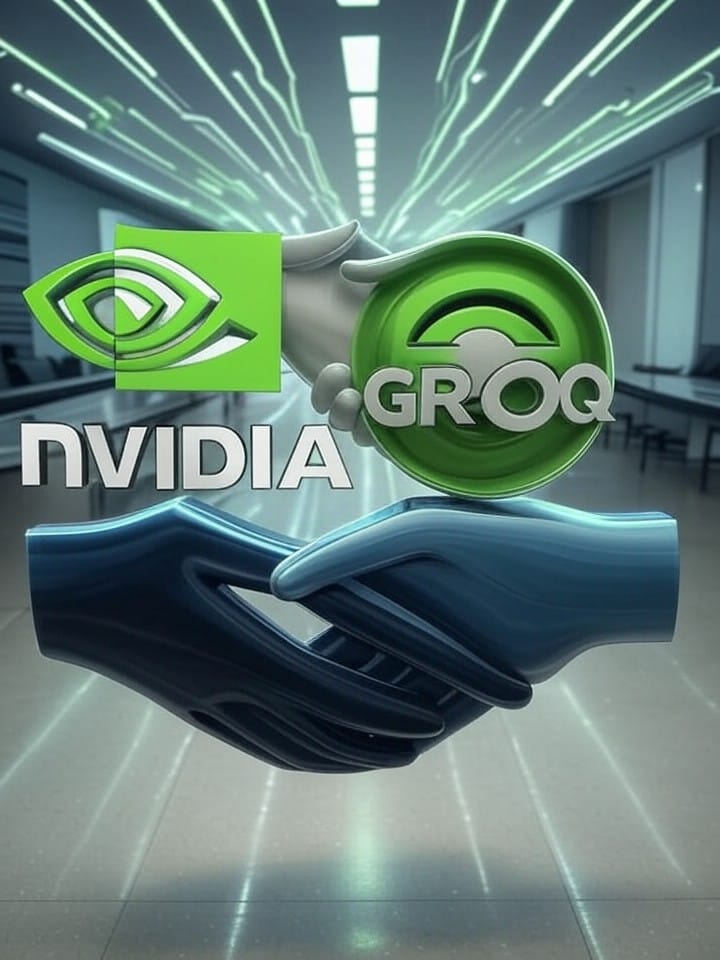
Nvidia’s acquisition of Groq for $20 billion marks one of the most significant deals in the artificial intelligence hardware industry to date. The move consolidates Nvidia’s leadership in AI computing while absorbing one of its most innovative challengers in the semiconductor space. As the global demand for AI chips skyrockets, this acquisition underscores how critical advanced processors have become for powering large language models, autonomous systems, and next-generation cloud computing.
Nvidia’s Strategic Move into Next-Generation AI Hardware
This acquisition isn’t merely about enhancing market share—it represents a strategic bet on the future of AI infrastructure. Nvidia, already a leader in GPU technology, has been facing growing competition from startups like Groq, Cerebras, and Graphcore. Each of these companies has introduced new processor architectures designed to outperform GPUs in specific AI workloads. By bringing Groq under its wing, Nvidia gains access to a unique Tensor Streaming Processor (TSP) architecture capable of significant performance gains in large-scale inference tasks.
The $20 billion deal, which reportedly includes both cash and stock components, reflects Nvidia’s confidence in the long-term demand for AI acceleration technology. Analysts estimate that the AI chip market could exceed $400 billion by 2030, positioning Nvidia to dominate both the hardware and software ecosystems that underpin advanced machine learning.
Who Is Groq and Why It Mattered to Nvidia
Groq, founded by former Google engineer Jonathan Ross in 2016, quickly gained recognition for its innovative chip design tailored for AI workloads. The company’s technology was developed to process machine learning models faster and more efficiently than traditional GPUs. Unlike many of its competitors, Groq’s processors reduce latency by using a deterministic architecture that ensures predictable performance. This feature has proven particularly valuable for real-time applications such as autonomous driving, financial modeling, and large language model inference.
Prior to the Nvidia deal, Groq had raised hundreds of millions of dollars from notable investors and had been working with key clients in defense, automotive, and cloud services. Its breakthrough technology had also caught the attention of major tech firms seeking alternatives to Nvidia’s dominant GPU ecosystem. That competitive dynamic now changes dramatically with the acquisition.
Implications for the AI Chip Market
This acquisition has wide-ranging implications across the tech industry. Nvidia not only eliminates a rising competitor but also integrates Groq’s proprietary advances into its broader product line. The combination could accelerate Nvidia’s efforts to create AI systems that can handle increasingly complex workloads with greater energy efficiency.
1. Reinforcing Nvidia’s Market Leadership
With Groq’s addition, Nvidia strengthens its hold on multiple layers of the AI hardware stack—from data center GPUs and networking solutions to edge computing devices. Industry analysts suggest that the merged technology could enable Nvidia to develop new processor classes optimized for real-time machine learning inference, bridging the gap between training and deployment environments.
2. Competitive Pressure on Other Chipmakers
This move places new pressure on AMD, Intel, and cloud giants like Google and Amazon, which have been investing heavily in their own AI accelerators. By consolidating innovation under its brand, Nvidia gains both intellectual property and human talent that could accelerate its lead in high-performance AI computing.
3. Potential Scrutiny from Regulators
Given Nvidia’s dominant position, the acquisition will likely face scrutiny from antitrust regulators in the United States and European Union. In 2022, Nvidia abandoned its proposed $40 billion acquisition of Arm after facing regulatory pushback. However, early indications suggest that this transaction, while large, might receive smoother approval since Groq is still relatively small compared to Nvidia’s overall business scale.
How This Impacts AI Development Globally
The AI industry relies heavily on hardware advancements to support the rapid training and deployment of deep learning models. The Nvidia-Groq merger could fuel a new wave of performance improvements, making it possible to train larger language models faster and at lower cost. Cloud service providers such as Amazon Web Services, Microsoft Azure, and Google Cloud are expected to benefit from the expanded capabilities Nvidia can now offer.
Additionally, this merger may impact smaller AI startups that previously partnered with Groq for access to specialized chips. These companies may now become part of Nvidia’s developer ecosystem, benefiting from broader support, tools, and integration within CUDA and TensorRT frameworks.
Investor Reaction and Market Outlook
Nvidia’s stock has remained a bellwether for the AI sector, and early investor reaction to the Groq acquisition has been largely positive. Analysts view the deal as another step in Nvidia’s long-term strategy to control the full spectrum of AI technology—from raw compute power to advanced software optimizations. While $20 billion represents a significant investment, observers note that Nvidia’s valuation and revenue growth justify aggressive expansion.
Industry experts anticipate that Groq’s integration will take several quarters. Once completed, Nvidia may announce a new line of data center processors blending GPU and TSP capabilities, further redefining the performance metrics for AI inference engines. The resulting chips could see adoption in enterprises focused on natural language processing, robotics, and real-time analytics.
The Human Capital Behind the Deal
Beyond technology, the deal underscores the importance of human talent in advancing AI. Groq’s engineering team, known for pushing boundaries in low-latency design and compiler architecture, will bolster Nvidia’s already robust research division. This infusion of expertise enables Nvidia to tackle challenges in efficient memory utilization, model compression, and distributed AI processing at scale.
Jonathan Ross is expected to play a key leadership role within Nvidia following the acquisition. Sources close to the company suggest that Ross will oversee a new division focused on deterministic computing and next-generation inference chips, a signal that Nvidia intends to evolve beyond the traditional GPU paradigm.
What This Means for the Broader Tech Ecosystem
The consolidation of AI hardware innovation under major players raises questions about accessibility and diversity in the AI ecosystem. While Nvidia’s acquisition of Groq could lead to enhanced performance standards, it may also reduce competition and limit open experimentation with alternative architectures. Startups entering the AI chip space will need to innovate rapidly to carve out niches that differentiate from Nvidia’s expansive portfolio.
For cloud providers and enterprise customers, however, the merger promises smoother integration, better software support, and potentially lower costs over time. By incorporating Groq’s deterministic architecture, Nvidia could deliver more predictable performance across massive workloads—a key requirement for mission-critical applications in healthcare, defense, and finance.
Conclusion: Nvidia’s Expanding AI Empire
Nvidia’s $20 billion acquisition of Groq symbolizes more than just another corporate deal—it’s a defining moment in the evolution of AI hardware. As demand for specialized chips accelerates, Nvidia’s strategy to integrate innovative architectures like Groq’s TSP demonstrates its commitment to staying ahead of both technological and market trends. The merger enhances Nvidia’s ability to deliver powerful, efficient, and scalable computing solutions worldwide.
While regulatory reviews and integration challenges lie ahead, the acquisition positions Nvidia to dominate the future of AI infrastructure. For developers, businesses, and investors alike, this marks a new chapter in the race to build the next generation of intelligent computing systems.