




Kevin O’Leary’s Wonder Valley AI Project: Will the World’s Largest AI Data Center Ever Be Built?
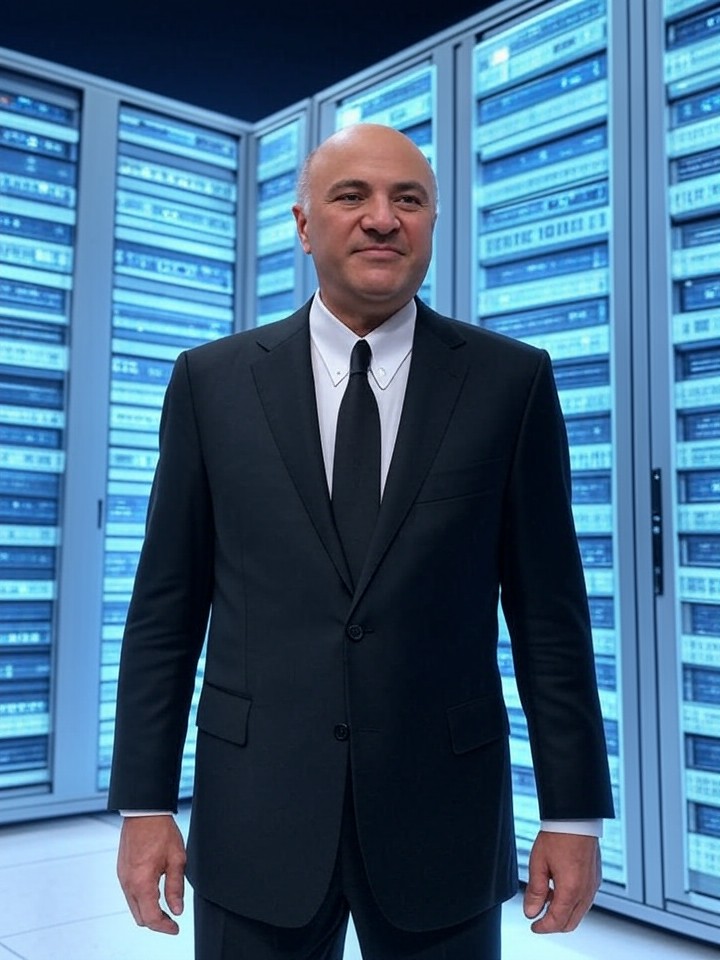
Kevin O’Leary, known to millions as “Mr. Wonderful” from the hit TV show Shark Tank, made headlines with his bold promise to create the world’s largest artificial intelligence (AI) data center—an ambitious project dubbed Wonder Valley AI. Initially introduced as a transformative leap forward in data processing and sustainable AI infrastructure, the initiative has since hit a series of stumbling blocks. Investors, regulators, and local communities are now questioning whether O’Leary’s grand vision will ever materialize.
The Vision Behind Wonder Valley AI
Announced in 2023, Wonder Valley AI was pitched as a groundbreaking effort to build the world’s largest AI data facility, set to span thousands of acres and feature advanced computing capabilities powered by renewable energy. Kevin O’Leary’s plan emphasized America’s leadership in AI technology and sought to position the United States as a counterbalance to Asia’s rapid acceleration in data center development.
The facility was reportedly intended to leverage cutting-edge liquid-cooling systems, AI-driven automation, and partnerships with major tech companies. Beyond its technological aspirations, O’Leary framed the project as a job-creation engine for local communities, promising thousands of new opportunities in construction, software development, and green energy management.
Regulatory and Environmental Roadblocks
Despite its promising concept, Wonder Valley AI has faced significant regulatory challenges since its early planning stages. Federal and state regulators reportedly raised concerns over environmental sustainability, particularly regarding water consumption in the arid region where the facility was proposed. Large-scale data centers require billions of gallons of water yearly for cooling, a point of contention in drought-prone areas.
Additionally, local zoning boards and environmental agencies have demanded extensive impact studies to ensure compliance with conservation standards. According to local reports, many community members have voiced concerns over the project’s potential disruption to wildlife habitats and rural landscapes.
Community Response and Growing Opposition
While some residents support O’Leary’s vision for economic growth, others argue that the project’s benefits are overstated. Public hearings have echoed sentiments of skepticism, with concerns about increased electricity demands, noise pollution, and the strain on already-limited infrastructure. The proposed site’s rural location also poses logistical challenges related to transportation and grid connectivity.
Social media discussions in tech and sustainability forums have amplified these worries, questioning whether the project was announced prematurely, without adequate due diligence or stakeholder consultation.
Financial and Technical Hurdles
The financial scale of the Wonder Valley AI initiative was always staggering. Estimated at over $30 billion, the project aimed to attract both private equity and government incentives to fund its construction and long-term operation. However, rising interest rates, increasing material costs, and global supply chain constraints have made raising capital substantially harder.
Data center development has become exponentially more expensive over the last few years due to technological inflation and the energy consumption associated with AI systems. Industry experts warn that without major investors lined up, O’Leary’s plan could remain conceptual.
According to analysts, even among major players like Google, Microsoft, and Amazon Web Services, scaling AI data infrastructure at this magnitude requires years of phased investment and logistical coordination. For a new consortium like Wonder Valley AI, that challenge is multiplied by uncertainty over demand projections and the rapidly changing AI regulatory landscape.
The AI Data Center Boom—and Bust Cycles
O’Leary’s announcement came at a time when AI was driving an unprecedented surge in data infrastructure projects worldwide. The generative AI boom created a race among governments and corporations to build advanced computing hubs capable of handling enormous workloads.
However, the same expansion sparked sustainability alarms. Major cities like Phoenix, Dallas, and Las Vegas have already reported grid constraints and water-supply conflicts linked to growing data center clusters. This broader context has put projects like Wonder Valley AI under intense scrutiny about balancing innovation with responsibility.
Comparison to Other Mega-Projects
To understand the scale of O’Leary’s ambition, it’s useful to compare Wonder Valley AI with similar industry benchmarks. For example, Microsoft’s new data campus in Wisconsin and Google’s facilities in Iowa represent multibillion-dollar builds, yet none claim to reach the projected size and scope announced by O’Leary. This comparison underscores both the potential and the risk of his endeavor—an attempt to leapfrog established tech giants with an unproven blueprint.
While many entrepreneurs admire O’Leary’s business acumen, some experts suggest the Wonder Valley plan might have been more aspirational than practical. “Building the world’s largest anything in tech infrastructure requires not just vision, but ecosystem alignment,” said one industry analyst. “Regulators, financiers, and green energy providers must all move in sync, which rarely happens without government backing.”
Is Wonder Valley AI Still Happening?
As of early 2024, updates about the Wonder Valley AI project have been scarce. Public records indicate limited tangible progress beyond land evaluations and preliminary filings. Despite O’Leary’s ongoing media presence and verbal assurances of commitment, the absence of clear development milestones has left many questioning its viability.
The project’s official website remains minimal, providing broad descriptions of mission and purpose but no confirmed construction timeline. Analysts believe this prolonged silence reflects deeper funding struggles and potential reevaluations of scope.
Some insiders speculate that regulatory bottlenecks and negative public sentiment might push the project into a redesign process or even indefinite delay. Others think O’Leary could pivot the brand into smaller-scale, modular data centers aligned with evolving environmental standards.
The Broader Lesson for AI Infrastructure Development
The uncertainty surrounding Wonder Valley AI offers a case study in the challenges of building large-scale, sustainable AI infrastructure. As the world races toward AI transformation, this project underscores the friction between ambition and execution. Data centers represent the physical backbone of the digital economy, yet each facility adds to concerns over energy consumption and climate impact.
For investors and communities alike, O’Leary’s predicament is a cautionary tale of balancing innovation with realism. The promise of creating the world’s largest AI data center may sound inspiring, but it must align with practical constraints of location, regulation, and finance.
Conclusion: A Bold Vision Hanging in the Balance
Kevin O’Leary’s Wonder Valley AI project began as a symbol of optimism and technological progress—a mission to put America at the forefront of the global data revolution. Months later, it stands as a reminder of how complex such aspirations can be when confronted with environmental, financial, and bureaucratic realities.
Whether Wonder Valley AI will become a breakthrough success or a lesson in overreach remains to be seen. For now, the world’s largest AI data center exists more as an idea than a construction site. What’s certain is that this debate over innovation versus impact will continue shaping the trajectory of AI infrastructure for years to come.
Keywords: Kevin O’Leary AI data center, Wonder Valley AI project, world’s largest AI data center, AI infrastructure development, sustainable data centers, AI regulation, data center investment, Kevin O’Leary news 2024