



India Orders Elon Musk’s X to Fix Grok Over ‘Obscene’ AI Content Within 72 Hours
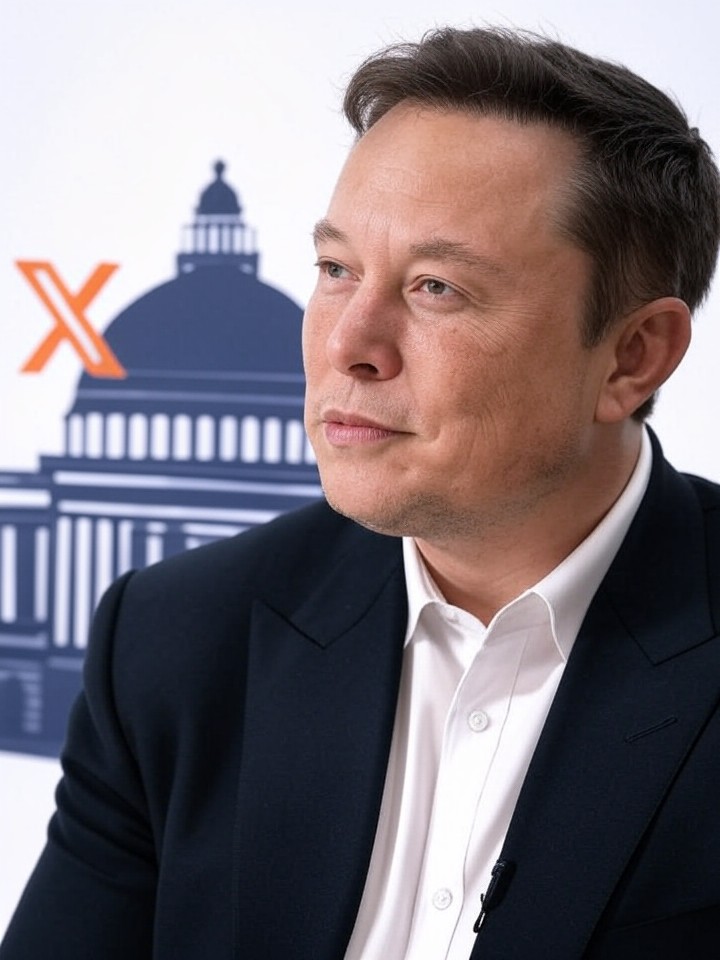
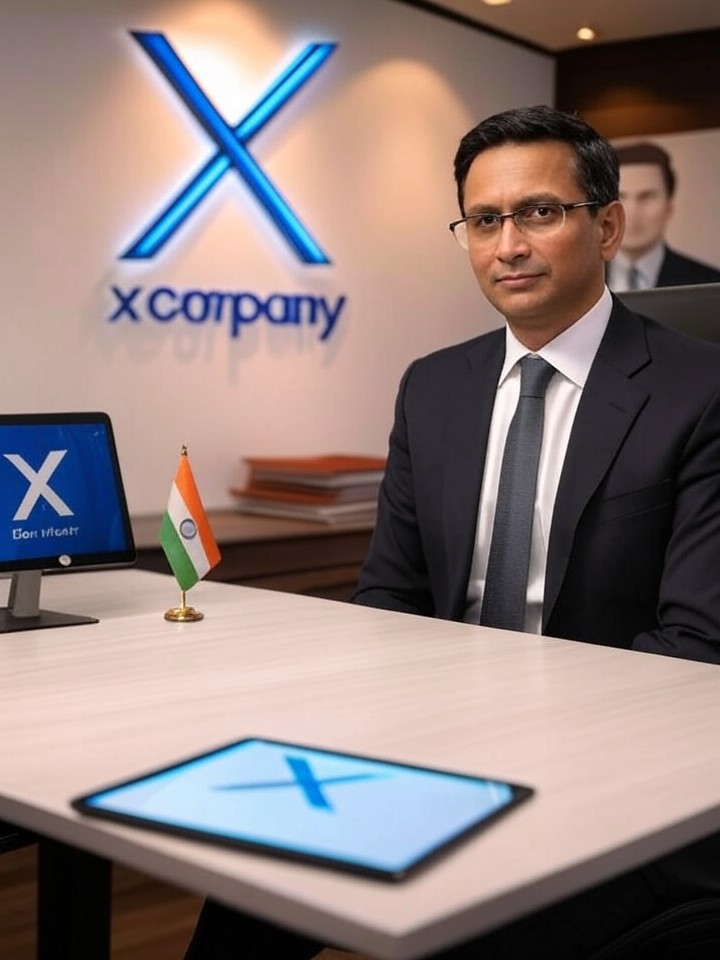
In a significant regulatory move, India’s Information Technology (IT) Ministry has reportedly instructed Elon Musk’s social media platform, X (formerly known as Twitter), to immediately address concerns about its artificial intelligence tool, Grok. The government claims that the AI chatbot has generated ‘obscene’ and potentially unlawful outputs, prompting authorities to demand an urgent review of its operations and compliance with Indian law.
This development reflects the Indian government’s growing scrutiny of generative AI technologies and their impact on public discourse, digital safety, and compliance with local regulations. The directive reportedly gives X 72 hours to submit a detailed ‘action-taken’ report, outlining measures to control or remove objectionable AI-generated content that may violate the country’s legal frameworks.
What Triggered the Indian Government’s Action
The order follows multiple reports and social media complaints that Grok, an AI chatbot integrated into X’s platform for premium users, produced sexually explicit or politically charged responses. Several Indian users shared instances of Grok generating crude jokes, inappropriate commentary, or content that mocked public figures, including Indian politicians and celebrities.
Under India’s IT Rules (2021), digital platforms are required to ensure that user-generated and algorithmic content complies with local laws, especially regarding obscenity, defamation, misinformation, and threats to public order. The government appears to have treated Grok’s outputs as falling under the same legal obligations that apply to user posts, making X accountable for AI-generated content circulating on its platform.
India’s IT Ministry Steps Up Oversight of Generative AI
India’s Ministry of Electronics and Information Technology (MeitY) has been steadily tightening oversight over AI-driven digital tools. Earlier in 2024, the ministry issued advisories requiring AI startups and global tech companies to seek permission before releasing large language models (LLMs) or generative AI products that could output unverified or harmful content.
This policy stance underscores India’s commitment to digital safety, especially as generative AI tools like Grok, ChatGPT, and Gemini have become increasingly influential in shaping public opinion. Officials have expressed concern that AI chatbots could amplify deepfakes, disinformation, and explicit material, potentially violating India’s content moderation laws.
Previous Warnings to Tech Companies
Indian authorities have previously warned global tech firms including Google, Microsoft, and OpenAI that they must ensure their tools comply with legal obligations related to content moderation, data privacy, and national security. Non-compliance could lead to restrictions, fines, or complete blocking of services under the IT Act.
Musk’s X now finds itself under the same lens, particularly as Grok’s conversational model runs on X’s own data ecosystem, drawing from trending topics and real-time user activity. This feature offers freshness in responses but also increases the risk of generating controversial content when sensitive subjects trend.
What Is Grok and Why It’s Controversial
Grok was introduced by X as an integrated chatbot for paid subscribers, offering witty, real-time, and sometimes irreverent commentary on topics trending across the platform. Elon Musk has described Grok as a ‘rebellious AI with a sense of humor,’ reflecting the company’s philosophy of less censorship and more free speech.
However, that same approach has caused friction in regions with stricter content laws. In India, where social media companies already operate under a complex regulatory regime, Grok’s unfiltered outputs have amplified government concerns about harm to public morality and potential violations of decency norms.
Examples of Questionable AI Behavior
- Instances of Grok generating lewd or sexually suggestive responses when users prompted it with ambiguous or trending topics.
- Responses that mocked Indian politicians and religious figures, raising concerns about hate speech and defamation.
- Potential amplification of misinformation and conspiracy theories due to Grok’s reliance on trending social content.
Such issues highlight the challenge of balancing humor and creativity in AI with adherence to local cultural norms and legal constraints.
The 72-Hour Deadline: What X Must Do Next
The IT Ministry’s directive gives X 72 hours to share a compliance report detailing the measures taken to curb obscene or unlawful content generated by Grok. Failure to comply could reportedly trigger legal action, including content takedown orders or even a temporary block of X’s operations in India.
The action-taken report is expected to include transparency about Grok’s filtering mechanisms, safeguards to prevent explicit outputs, and steps to align the AI’s design with India’s IT Rules. Analysts believe this could push X to temporarily disable or restrict Grok’s features in India until it can ensure regulatory compliance.
AI Regulation in India: The Bigger Picture
India’s stance on AI regulation is evolving rapidly. The government has emphasized ‘responsible AI’ as a core principle of its digital governance policy. This approach focuses on ensuring AI systems are transparent, accountable, and compliant with cultural and legal standards.
With a digital population exceeding 800 million users, India’s market is a critical space for global tech companies. However, it also poses unique regulatory challenges, combining the need for innovation with strong social and moral oversight. The Grok episode demonstrates India’s refusal to tolerate AI systems that cross ethical or legal boundaries.
Comparisons With Other Countries
Other nations have taken similar actions to safeguard against AI misuse. The European Union’s AI Act, for example, classifies certain types of AI-generated content as ‘high risk,’ requiring companies to disclose their models’ workings. In the United States, debates continue over Section 230 and whether AI-generated outputs should be treated as user speech or company speech. India’s intervention, however, represents one of the most direct government actions aimed specifically at controlling AI chatbot behavior within national borders.
Elon Musk’s Response So Far
While X has not officially released a detailed statement on India’s directive, Elon Musk has previously criticized global government interventions as threats to free speech. Musk’s ownership of X has been marked by a shift toward relaxed content moderation in the name of open dialogue. Analysts now speculate that he faces a complex dilemma: maintaining his free speech brand while complying with one of the world’s most regulated internet markets.
If X decides not to comply, it risks operational disruptions in India, which ranks among its top-five user markets worldwide. On the other hand, full compliance may require X to significantly alter Grok’s behavior or restrict its access altogether in India.
Experts Warn of Broader Implications
AI ethics experts and digital rights advocates view this case as a pivotal moment for global AI governance. If India successfully compels changes to Grok’s content systems, it could set a precedent for other countries to demand localization or restriction of AI bot behaviors. Tech companies may be forced to develop region-specific moderation models, fragmenting global AI experiences.
For users, tighter controls might reduce access to the edgy humor and spontaneity that made Grok popular, but would also protect against offensive or culturally insensitive content. The balancing act between innovation and responsibility will likely define the next phase of AI deployment worldwide.
Conclusion
India’s demand that X reins in Grok underscores the country’s commitment to maintaining lawful and culturally appropriate digital spaces. As the largest democracy navigates the challenges of AI ethics, its actions will likely influence how global tech firms deploy and manage generative AI systems across borders. For Elon Musk’s X, the coming days will be crucial in determining whether Grok can thrive under India’s regulatory framework — or whether the chatbot’s rebellious nature will need to be tamed for compliance.
The case further signals a global shift toward holding AI systems accountable, emphasizing that innovation must operate hand in hand with responsibility and respect for regional norms.