







Nvidia Expands Its AI Dominance by Licensing Groq’s Chip Technology and Hiring CEO
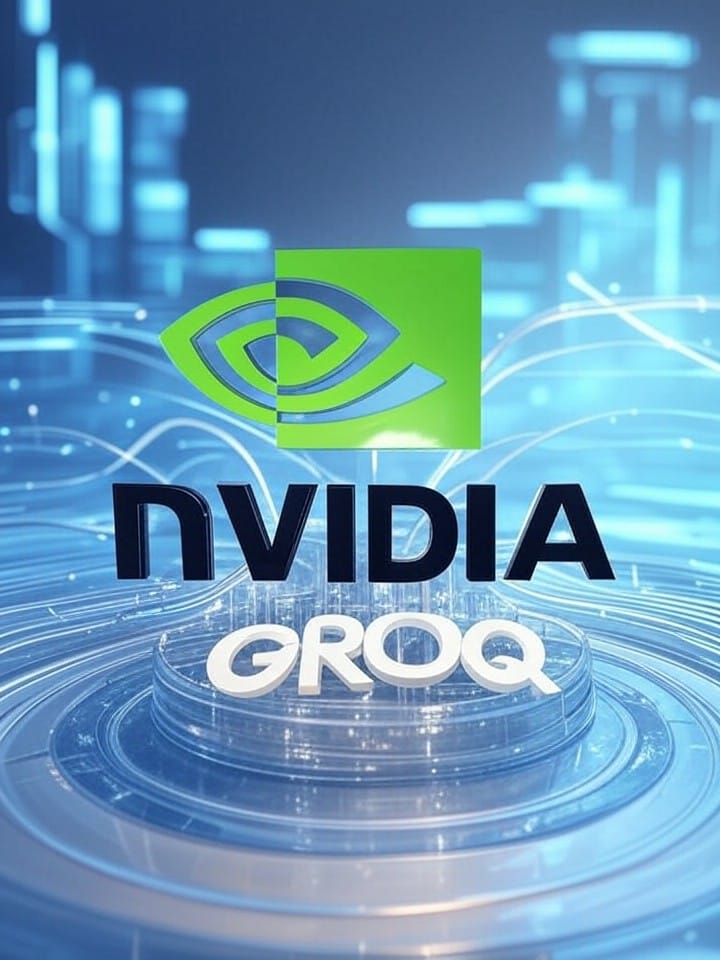
Nvidia has made a major announcement that could reshape the AI chip industry: it will license the breakthrough computing technology of Groq, a rising artificial intelligence chip designer, and is bringing Groq’s CEO on board to lead a new division. This move underscores Nvidia’s commitment to expanding its innovation in artificial intelligence hardware and infrastructure, taking another significant step toward maintaining its leadership in the rapidly evolving AI space.
Nvidia’s New Strategic Move in AI Chip Technology
The decision to license Groq’s AI technology comes at a time when demand for high-performance chips is soaring worldwide. Nvidia’s graphics processing units (GPUs) have become central to AI training, data science, and machine learning workloads. By integrating Groq’s inferencing-focused architecture, Nvidia is positioning itself to dominate not just the training side of AI, but also the deployment of AI at scale in data centers and edge computing environments.
Groq has developed an innovative tensor streaming processor (TSP) architecture that differs from traditional GPUs. It is designed for ultra-low latency processing, enabling AI models to run faster and more efficiently. This technology complements Nvidia’s high-performance GPUs, forming a powerful combination that could speed up model deployment for companies working on generative AI, natural language processing, autonomous driving, and scientific simulation.
Why Groq’s Technology Matters
Groq, founded by former Google engineers, built its reputation on specializing in deterministic AI chips that deliver predictable performance without the variability seen in GPU-based systems. This design philosophy has made Groq chips particularly attractive to organizations prioritizing real-time processing, such as financial institutions, autonomous vehicle companies, and robotics developers. Groq’s approach eliminates the need for complex scheduling or load balancing systems, reducing development time and improving energy efficiency.
For Nvidia, incorporating Groq’s architecture could significantly enhance its AI platform spectrum. While Nvidia GPUs dominate for model training, Groq’s low-latency chips enable faster inference — the process of using a trained model to make predictions. This complementary fit suggests Nvidia’s expanding ambition to provide a full-stack solution covering every stage of the AI lifecycle.
The Role of Groq’s CEO in Nvidia’s Future
Nvidia’s hiring of Groq’s CEO further validates the importance of this acquisition-like partnership. The incoming executive is expected to lead a new internal group focused on integrating advanced inference technologies and exploring distributed AI workloads. This leadership move also signals Nvidia’s intention to strengthen its organizational expertise in chip architecture diversification and innovation beyond GPUs.
Industry analysts note that bringing in a high-caliber executive with hands-on experience in designing cutting-edge chips could accelerate Nvidia’s roadmap toward developing next-generation AI accelerators. It’s a strategic move aimed not only at preventing competitors from leveraging Groq’s technology, but also at expanding Nvidia’s ability to address a broader set of computing challenges.
Implications for the Global AI Market
Licensing Groq’s technology positions Nvidia as an even stronger force within the AI chip market, which has seen unprecedented growth due to rising investments in generative AI applications like large language models and multimodal AI systems. By combining Nvidia’s established ecosystem with Groq’s efficiency-oriented design, the company could further cement its leadership across cloud computing, enterprise AI, and data infrastructure sectors.
Other AI chip developers such as AMD, Intel, and startups like Cerebras and SambaNova now face increased pressure to innovate at a faster pace. Nvidia’s move effectively sets a new performance benchmark, as it integrates best-in-class solutions for both training and inference workloads.
The Competitive Landscape
Until now, Nvidia’s primary competition has come from traditional chipmakers aiming to capture a portion of the lucrative AI hardware market. AMD’s Instinct accelerators and Intel’s Habana line of AI chips have gained traction, yet none have matched Nvidia’s software ecosystem, particularly its CUDA platform. Groq’s inclusion could extend Nvidia’s software-hardware synergy, providing developers with more tools and greater performance optimization for inference models.
The partnership also sends a signal to cloud providers and AI researchers who rely heavily on Nvidia hardware. With Groq’s technology added to the mix, customers could experience lower latency, reduced energy costs, and shorter deployment cycles for AI models — all key differentiators in large-scale machine learning operations.
The Broader Impact on AI and Computing
Nvidia’s integration of Groq technology has the potential to transform how AI computations are handled across industries. In healthcare, faster inferencing could enable real-time medical imaging analysis and improved diagnostics. In finance, it could reduce latency in algorithmic trading systems. For transportation and industrial automation, it may lead to improved safety and decision-making systems powered by AI models capable of processing vast amounts of sensor data instantly.
This partnership could also pave the way for more energy-efficient computing. Groq’s deterministic architecture is known for its predictable power usage, which aligns with the tech industry’s growing sustainability initiatives. Nvidia’s commitment to reducing carbon footprints in data centers by optimizing chip performance further reinforces this synergy.
Expert Reactions and Market Expectations
Industry experts are calling this development one of the most significant moves in the semiconductor sector since Nvidia’s earlier acquisitions in AI and networking technology. Market analysts predict that the integration of Groq’s IP could lead to next-generation processors that redefine the balance between computational power and efficiency. Investors have also responded positively, viewing the move as a signal of Nvidia’s long-term strategy to secure dominance across all layers of AI infrastructure.
According to experts, this decision shows Nvidia’s ability to stay ahead of competitors not only through raw performance but through strategic foresight. By aligning itself with key innovators like Groq, Nvidia is shaping the direction of AI hardware evolution for years to come.
Challenges and Future Outlook
While the Groq licensing agreement offers exciting prospects, integrating two distinct architectures will not be without challenges. Nvidia must ensure that the combined technologies remain compatible and deliver tangible benefits across its product line. There are also intellectual property and engineering considerations when merging distinct frameworks and design philosophies.
Despite these hurdles, Nvidia’s track record of successful acquisitions and integrations — including Mellanox and Arm’s partial collaboration — indicates a strong capability to execute complex technological integrations. The Groq partnership is expected to start showing results within the next few product cycles, potentially as early as next year’s lineup of AI system-on-chip platforms.
Conclusion: A Defining Moment for AI Hardware Leadership
Nvidia’s decision to license Groq’s AI technology and bring its CEO on board marks a pivotal moment in the evolution of artificial intelligence hardware. By fusing their technological strengths, Nvidia is building a more robust, complete ecosystem that addresses both performance-demanding training operations and real-time inference processing needs. This move not only consolidates Nvidia’s hold on the AI market but also sets new standards for what next-generation AI computing should look like — faster, more efficient, and deeply integrated across industries.
As the global demand for AI capabilities continues to surge, Nvidia’s foresight in partnering with pioneers like Groq demonstrates a clear commitment to staying at the forefront of innovation. The collaboration may well become an industry-defining turning point in the race toward AI hardware supremacy.