






John Carreyrou and Authors File Landmark Lawsuit Against Major AI Companies Over Copyright Use
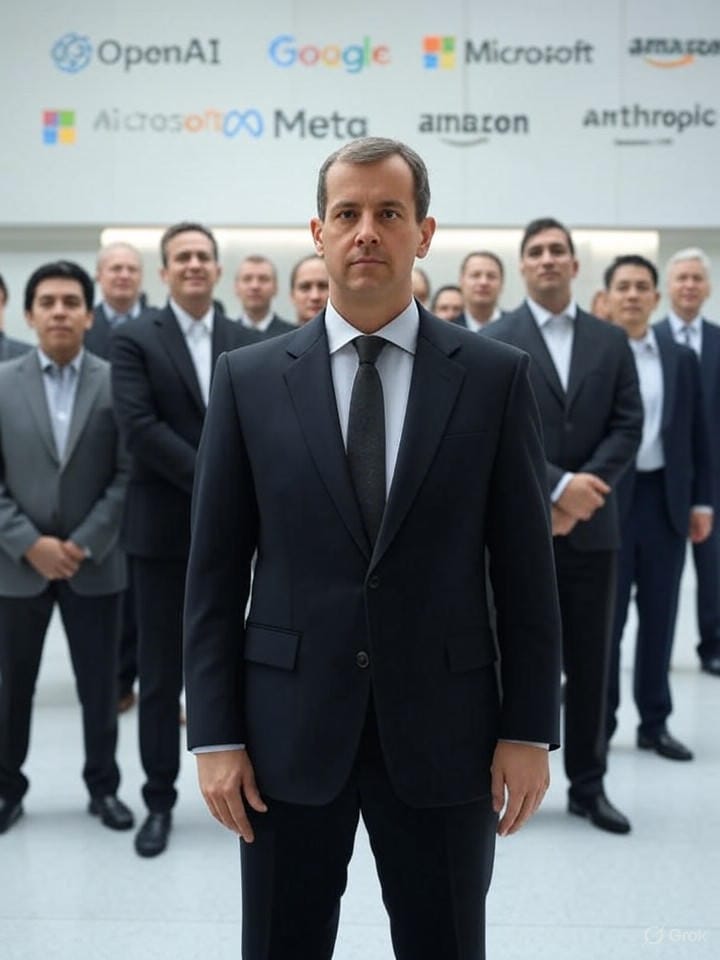
In a development that could redefine how artificial intelligence companies operate, investigative journalist John Carreyrou and a group of renowned authors have filed a lawsuit against six of the world’s most powerful AI firms. The case, which targets OpenAI, Microsoft, Anthropic, and other major players, centers on claims of copyright infringement and unethical data usage for training large language models. This lawsuit adds fresh momentum to the growing debate over the ethical boundaries of AI innovation and creative ownership.
The Lawsuit: Authors Fight Back Against AI Data Practices
Carreyrou, best known for his investigative work exposing Theranos in his bestselling book Bad Blood, is joining other writers who allege that their copyrighted works were used without consent to train generative AI systems. The lawsuit argues that these AI companies have leveraged massive datasets, often scraped from the internet, to develop models like OpenAI’s ChatGPT, Microsoft’s Copilot, and Anthropic’s Claude — all without compensating or crediting the original creators.
The plaintiffs contend that their intellectual property has been unfairly commercialized to create tools that generate content strikingly similar to human-authored works. As generative AI tools become integral to industries ranging from journalism to marketing, concerns around ownership, attribution, and data ethics are reaching critical levels.
OpenAI Responds to Legal and Security Challenges
In parallel with the growing wave of legal scrutiny, OpenAI has acknowledged the inherent risks in its AI systems, particularly surrounding “prompt injections” — a type of manipulation that can compromise AI outputs. The company highlighted that such vulnerabilities are especially challenging for AI browsers with agentic capabilities, such as its internal project known as Atlas.
According to OpenAI representatives, while the firm is continuously improving its technology, prompt injection attacks will remain a persistent risk due to the open-ended nature of language models. To address these concerns, OpenAI announced new cybersecurity measures, including the deployment of an LLM-based automated attacker designed to stress test and fortify its systems against exploitation attempts.
What’s at Stake for the Publishing World
The publishing industry has long been cautious about the implications of AI-generated content. By training models on vast text repositories, including copyrighted literature, AI companies can effectively learn authors’ styles, narrative techniques, and linguistic patterns. This raises questions about whether the resulting insights constitute fair use or represent a direct infringement of creative ownership.
If the courts rule in favor of Carreyrou and the other plaintiffs, the verdict could set a precedent requiring AI developers to secure licenses or pay royalties to authors. Such a ruling would transform the current data economy, potentially forcing AI firms to rethink their approach to model training and copyright compliance.
The Broader Impact on AI Regulation
This lawsuit is the latest in a series of high-profile actions targeting AI companies over alleged misuse of intellectual property. Similar claims have been filed by visual artists, photographers, and software developers whose work was used to train AI systems without consent. Governments and regulators across the globe are also stepping in, seeking to impose stricter oversight on how AI models acquire and process data.
In the United States, policymakers are debating how existing copyright law can adapt to encompass AI technologies, while the European Union is pushing forward with its AI Act, one of the first comprehensive regulatory frameworks for artificial intelligence. Both jurisdictions emphasize transparency, data accountability, and ethical innovation — principles that lawsuits like Carreyrou’s are reinforcing.
Ethical Questions Surrounding AI and Creativity
The core issue extends beyond legal boundaries and into the ethical dimensions of creativity. Authors invest years into creating original works that reflect their intellectual labor and artistic voice. When AI models replicate or remix this creative output, it blurs the line between inspiration and appropriation.
AI companies argue that their models only learn from patterns within data, not from copying content verbatim. However, critics point out that in some cases, LLMs have reproduced phrases or styles that closely mirror specific authors. These instances fuel skepticism about whether current AI training methods can truly respect intellectual property rights.
Industry Response and Future Trends
In response to mounting criticism, several AI developers have begun to implement measures to enhance data transparency. Some firms are establishing partnerships with publishers or paying for licensed datasets to train their models ethically. OpenAI, for example, has reportedly entered discussions with major news organizations to secure proper data usage rights.
Meanwhile, cybersecurity efforts — including the use of automated attackers and dedicated red teams — are becoming standard practice in AI development. Experts believe that these defensive mechanisms will be crucial in maintaining system integrity as AI models evolve to handle more complex and autonomous tasks.
John Carreyrou’s Broader Mission
For Carreyrou, the lawsuit represents not only a legal battle but also a moral stance against what he and other authors see as a fundamental breach of trust between technology and the creative community. The journalist’s history of exposing corporate misconduct adds weight to his participation in the case, reflecting a broader demand for accountability in AI governance.
In recent interviews, Carreyrou emphasized that technology should empower, not exploit, creators. The lawsuit seeks not just monetary damages but an acknowledgment that AI development must respect human authorship and intellectual property.
Looking Ahead: Balancing Innovation and Ethics
As artificial intelligence continues to reshape industries, the need for ethical frameworks that reconcile innovation with creator rights becomes increasingly urgent. The Carreyrou-led lawsuit is likely to accelerate conversations about transparency, fairness, and data stewardship across the tech ecosystem.
If successful, the case could pave the way for a more balanced relationship between AI companies and content creators — one based on collaboration, consent, and equitable compensation. Conversely, if the defendants prevail, it could signal judicial recognition of AI’s learning process as transformative and protected under fair use.
Either outcome will influence how future AI systems are designed, trained, and deployed. As the boundaries of artificial intelligence expand, society faces the difficult task of ensuring that progress does not come at the expense of creativity and ownership.
Conclusion: A Defining Moment for AI Accountability
The lawsuit led by John Carreyrou and fellow authors against six major AI companies marks a defining moment in the debate over technology, ethics, and copyright law. It highlights a critical tension between innovation and respect for intellectual rights — one that legal systems around the world are now being forced to confront. In parallel, OpenAI’s cybersecurity advancements, including its LLM-based automated attacker, show that even as AI systems grow more powerful, they also face greater responsibility to operate safely, securely, and ethically.
This case could become one of the most influential in shaping how the next generation of AI tools are built, regulated, and trusted. For both authors and technologists, the outcome will serve as a compass for navigating the evolving intersection of creativity and machine intelligence.