
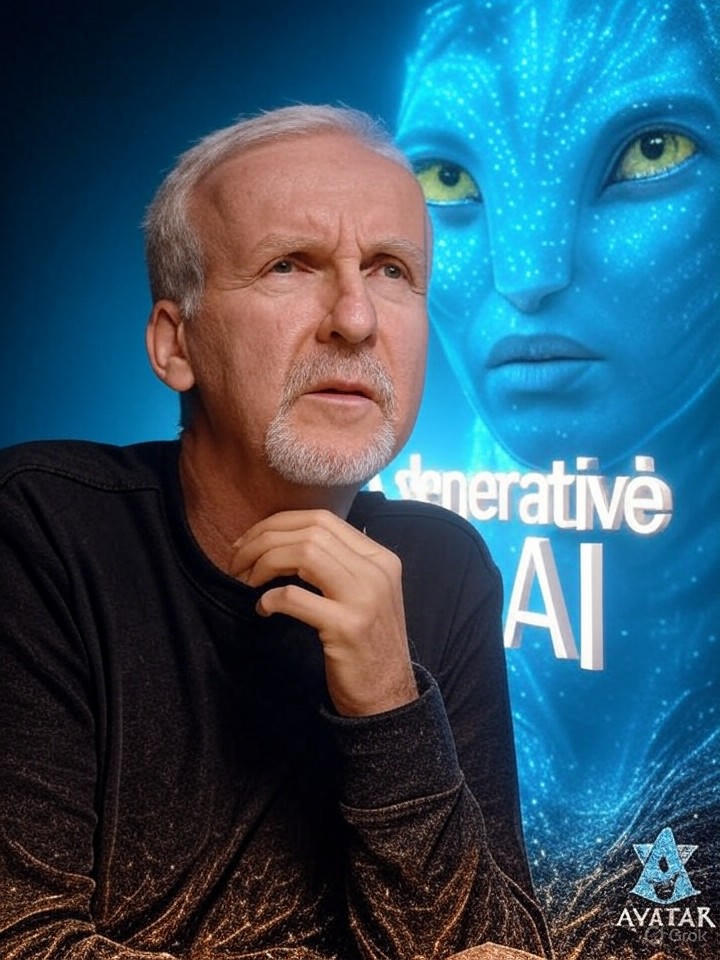
Generative AI has rapidly taken over creative industries, reshaping everything from screenwriting to visual design. Yet, not every filmmaker welcomes the change. Legendary director James Cameron, best known for pushing the boundaries of cinematic technology in films like Avatar and Titanic, recently described generative AI as “horrifying.” His comments shed light on a growing debate in Hollywood about the ethics and implications of artificial intelligence in filmmaking.
James Cameron’s Warning About Generative AI
During a recent interview, Cameron didn’t hold back his concerns about AI-generated content. While he has always embraced innovation – leading the way with groundbreaking 3D technologies and motion capture techniques – Cameron draws a clear line when it comes to machines generating art autonomously. His primary concern lies in what he calls the “dehumanization” of art, where algorithms begin to replace human storytelling.
According to Cameron, storytelling is inherently human. It’s about emotion, conflict, and moral reflection—qualities that AI lacks the capability to truly understand. He warns that the more the industry relies on generative AI to create scripts, visuals, or even music, the more it risks losing the human touch that makes cinema special.
Why the Director of ‘Avatar’ Rejects AI in Filmmaking
James Cameron’s relationship with technology has always been complex. From developing revolutionary underwater cameras for The Abyss to redefining digital filmmaking with Avatar, Cameron has built a career around technological innovation. However, unlike the tools he’s developed – which extend creative capacity – generative AI, in his view, replaces rather than enhances human contribution.
The filmmaker argues that technology should serve as a creative partner, not a creative author. While visual effects, motion capture, and virtual sets allow artists to expand their imaginations, AI operates differently. It uses pre-existing data to mimic human styles, often without true comprehension or originality. This distinction, Cameron insists, defines the line between artistic creation and mere replication.
The Ethical Challenges of AI-Generated Art
Beyond creative quality, Cameron also raises ethical questions. He points to issues such as data ownership, copyright, and authorship. When an AI system generates content based on patterns from existing works, who truly owns the final product? And how does that impact the livelihoods of writers, illustrators, and designers whose work fuels these models?
These questions are not theoretical. In recent years, screenwriters and Hollywood unions have pressed for regulations to ensure that AI doesn’t infringe on labor rights or creative ownership. Cameron’s stance aligns with these concerns, echoing a broader resistance among creators who fear an AI-driven content market could devalue artistry itself.
Generative AI in Hollywood: Promise vs. Peril
There’s no denying the efficiency of generative AI tools. Studios can now produce realistic CGI characters, automated storyboards, and even first draft screenplays at remarkable speed. For producers, this translates to fewer costs and shorter production times. For directors like Cameron, however, it raises a troubling question: What is the cost to authenticity?
Hollywood has already begun experimenting with AI-created elements in filmmaking. Some studios have used generative AI to de-age actors or recreate voices of deceased performers. While audiences have marveled at the results, purists argue that these techniques cross into ethically gray territory. Cameron, who is known for his deep dedication to character-driven storytelling, sees this as a symptom of an industry prioritizing convenience over craft.
James Cameron’s Long Relationship with Technology
Throughout his career, James Cameron has been a pioneer in merging storytelling with cutting-edge visual effects. His work on Terminator 2: Judgment Day, which introduced groundbreaking CGI, and the innovative use of 3D in Avatar, redefined what audiences expect from cinema. Yet even as technology advanced, the driving force of his films remained human emotion and moral complexity.
This balance between innovation and artistry has been central to Cameron’s philosophy. His critique of generative AI, therefore, doesn’t come from fear of progress but from an insistence that technology must always amplify, not diminish, human creativity.
The Emotional Core of Storytelling
One of Cameron’s central arguments is that storytelling cannot be reduced to data. AI systems rely on statistical patterns and predictive text models, yet they cannot feel empathy or experience emotion. For Cameron, this makes AI-generated scripts inherently hollow. He believes that cinema’s emotional resonance comes from an artist’s lived experience, moral reflection, and vulnerability—elements no machine can replicate.
In films like Avatar, Cameron explores human themes such as environmental stewardship, love, and sacrifice. These films resonate globally precisely because they come from human insight. Replacing that process with algorithms, Cameron argues, risks creating a world of synthetic entertainment devoid of emotional truth.
Public Response and Industry Debate
Cameron’s remarks have sparked widespread discussion among filmmakers, screenwriters, and AI experts. Some share his fear that the overuse of AI could erode the creative ecosystem, while others believe his stance underestimates AI’s potential as a supportive tool. For instance, some independent filmmakers argue that AI can democratize production, giving small creators access to resources previously reserved for big-budget studios.
Still, the consensus within creative communities leans toward caution. Many agree with Cameron’s belief that originality and human oversight must remain central in any creative process augmented by AI.
How AI Could Complement Human Creativity—Responsibly
James Cameron may see generative AI as a threat, but it’s worth noting that many experts advocate for a middle ground. Rather than allowing AI to replace human creators, the goal should be to use it as a tool of augmentation. For instance, AI can handle repetitive tasks like rendering or scene visualizations, allowing artists to focus more on conceptual design and narrative development.
By setting ethical boundaries and maintaining transparency about AI usage, the film industry can harness technology’s strengths without compromising integrity. Cameron’s critique reminds us that while efficiency is valuable, purpose and humanity should drive every creative decision.
The Future of Filmmaking in the Age of AI
As Hollywood moves forward with advanced tools like text-to-video generation and virtual actors, the industry must grapple with questions of originality and ownership. Cameron’s skepticism underscores a vital point: embracing technology should never mean abandoning artistic identity.
The debate over generative AI isn’t just about filmmaking—it’s about the future of creativity itself. How society navigates this technology will determine whether art remains a reflection of the human soul or evolves into a synthetic mirror of data-driven mimicry.
Conclusion: Protecting the Human Heart of Art
James Cameron’s warning about the “horrifying” potential of generative AI invites deeper reflection on what creativity means in the digital age. His message speaks to artists across disciplines: innovation must enhance humanity, not eclipse it. As filmmakers, writers, and creators explore new tools, Cameron’s perspective serves as a crucial reminder that the heart of storytelling lies not in algorithms, but in authentic, human experience.
For Hollywood and beyond, the challenge will be finding that balance—embracing technology’s possibilities while preserving the soul of creation. As Cameron’s career proves, true innovation doesn’t replace people; it empowers them to imagine more deeply than ever before.